

You Hear Noise
Squealing and Grinding Tell Different Stories
Brake noise can come from normal wear indicators, worn friction material, rotor contact, debris, hardware, or another condition. The sound tells us where to start, not which part to replace automatically.
The Pedal Feels Different
Do Not Treat a Pedal Change as Normal Wear
A pedal that feels softer, lower, firmer, or different from what you are used to gives us important information about the hydraulic and mechanical sides of the braking system.
Your Honda Shakes or Pulls
The Problem May Go Beyond Brake Pads
Vibration or pulling during braking can involve rotor condition, uneven brake operation, caliper concerns, or another vehicle condition. Inspection separates those possibilities.
Listen, Feel & Watch for Changes
What Different Honda Brake Symptoms Can Mean
You feel and hear the braking system from behind the wheel, but several components work together every time you stop. We use the symptom to narrow the inspection and then verify the source before recommending a repair.
| What You Notice | What It Suggests | Where We Start Checking |
|---|---|---|
| Squealing or chirping when braking | Friction material, wear indicators, rotor condition, or brake hardware deserves a closer look. | Brake pad thickness and condition, rotor surfaces, hardware, calipers, and the conditions that produce the noise. |
| Grinding or harsh metal-like noise | The braking surfaces or another mechanical component need prompt inspection. | Pads, rotors, calipers, hardware, backing plates, and surrounding brake components. |
| Pedal or steering-wheel vibration while braking | Something is changing as the rotating components slow under braking. | Rotor condition, brake operation at each wheel, wheel and tire condition, and related suspension components when appropriate. |
| Brake pedal feels soft, low, or different | A pedal change points toward the hydraulic system, brake adjustment, or another condition affecting how braking force is delivered. | Brake fluid, hydraulic lines and hoses, calipers, master-cylinder operation, leaks, and mechanical brake condition. |
| Honda pulls to one side while braking | Braking force may not be even from side to side, or another chassis condition may be influencing the vehicle. | Pad wear, caliper operation, rotors, brake hoses, tires, and related steering or suspension conditions. |
| Brake or ABS warning appears | The vehicle has detected a condition that needs to be identified rather than diagnosed from the light alone. | Applicable brake-system electronics, sensors, hydraulic conditions, fluid level, and the specific warning information stored by the vehicle. |
From the Symptom to the Repair
How Honda Brake Inspection Works at Tracy Honda
You do not have to decide whether you need pads, rotors, fluid, or another brake repair before you arrive. Tell us what changed. We compare that concern with the physical condition and operation of the braking system, then explain the work the inspection supports.
Start With What You Notice
Noise, vibration, pulling, pedal feel, warning lights, and when the symptom happens give us the first useful clues about where the inspection needs to go.
Inspect Wear and Brake Hardware
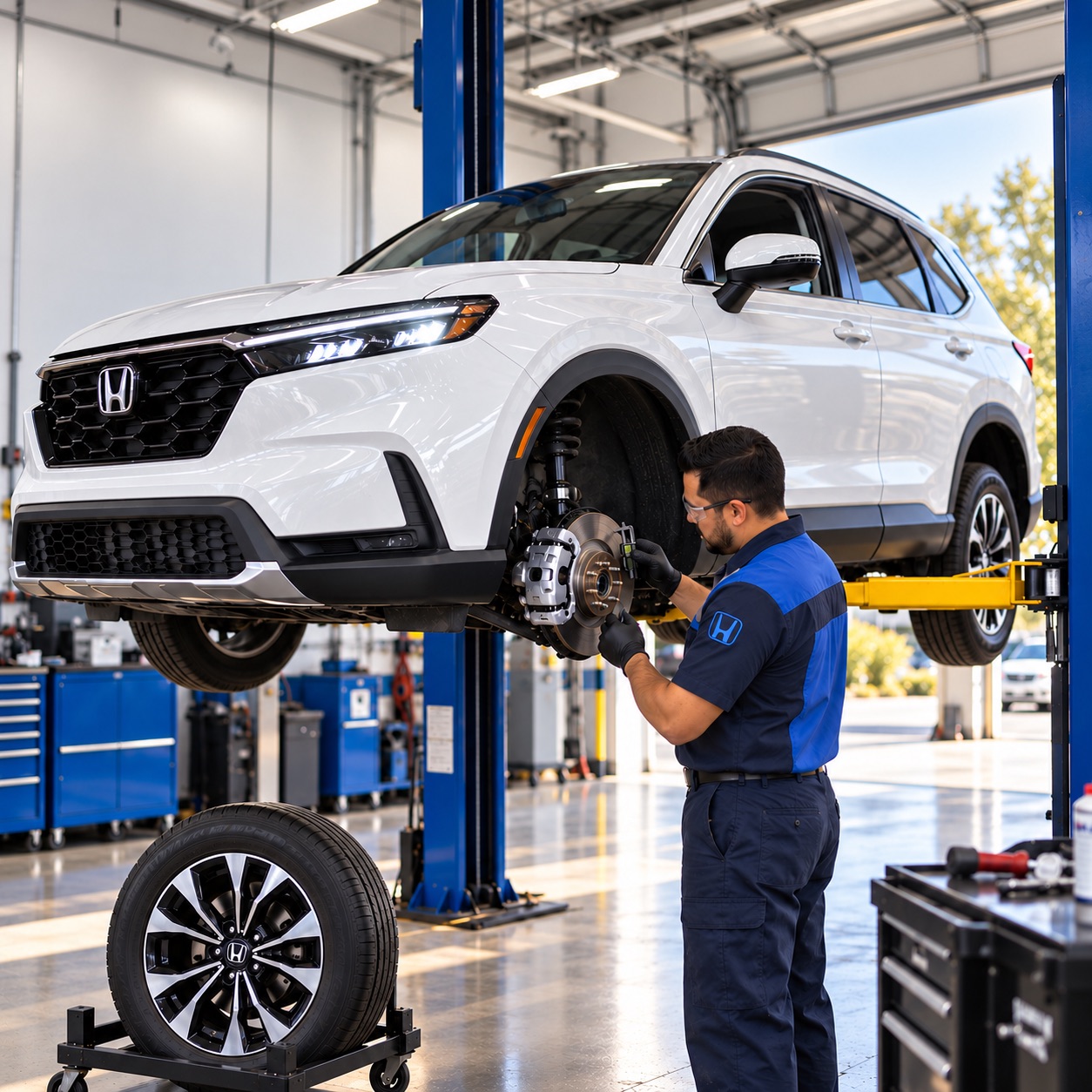
We inspect the relevant friction surfaces and hardware for wear, condition, and signs that one part of the system is not operating the way it should.
Check the Hydraulic Side
When the symptom calls for it, the inspection expands to brake fluid, hoses, lines, calipers, hydraulic operation, and the components that translate pedal input into braking force.
Connect the Finding to the Repair
We explain which component needs attention and why. You can make the repair decision around the condition we found instead of assuming every noise means the same brake job.

Service Based on What We Find
Honda Brake Service and Repair at Tracy Honda
Brake wear is not one single repair. Pads, rotors, hydraulic components, fluid, hardware, and electronic brake controls perform different jobs, so the service needs to follow the part of the system that actually needs attention.
System Condition
Brake Inspection
We inspect the braking components related to your concern so wear, damage, and operating problems can be separated before parts are recommended.
Friction Material
Brake Pad Replacement
When pad wear reaches the point where replacement is needed, we match the repair to the correct Honda application and inspect the components working with those pads.
Braking Surface
Brake Rotor Evaluation & Replacement
Rotor condition matters separately from pad wear. We evaluate the rotor surfaces and condition rather than treating new pads as an automatic reason to replace every rotor.
Mechanical Operation
Caliper & Brake Hardware Repair
Uneven wear, pulling, drag, or another brake concern can lead the inspection toward the calipers and hardware responsible for applying and releasing braking force.
Hydraulic System
Brake Fluid Service
Brake fluid is part of the hydraulic system that transfers pedal input to the brakes. We follow the maintenance requirements for your specific Honda and the condition of the system.
Electronic Controls
Brake & ABS Warning Diagnosis
When a brake-system or ABS warning appears, diagnosis starts with the vehicle information and system involved instead of replacing mechanical brake parts based on the warning light alone.
Before Your Appointment
Tell Us What Happens When You Apply the Brakes
You do not need to diagnose the braking system yourself. A few details from normal driving give us a stronger starting point, especially when the noise or vibration does not happen every time.
Frequently Asked Questions
Honda Brake Service & Repair FAQs
Get quick answers about brake noise, pads, rotors, vibration, pedal feel, brake fluid, warning lights, service timing, and scheduling Honda brake repair in Tracy.
Why Service With Us
Honda-Focused Support for the Repair Ahead
Factory-Authorized Honda Service Center
Our service department has Honda-focused tools, service information, and manufacturer-aligned repair resources.
Honda-Trained Service Team
Our team works with Honda vehicles every day, keeping the inspection centered on the systems and service requirements that apply to your vehicle.
Genuine Honda Parts Support
When brake service requires replacement parts, our Parts Department supports the repair with Honda-specific fitment and Genuine Honda Parts resources.
Online Service Scheduling
Start your appointment online and describe the brake symptom before arriving so our service team has useful context from the beginning.
Honda Brake Service at Tracy Honda
Get Back to Braking That Feels Familiar and Predictable
Schedule your brake service and tell us what changed: noise, vibration, pulling, pedal feel, a warning light, or another braking concern. We inspect the system, identify what needs attention, and connect the repair to the condition we actually find.